Paris has a way of wrapping you in its charm the moment you step onto its cobblestoned streets. It’s a city that doesn’t just show you its history; it lets you breathe it in, sip it slowly like a fine Bordeaux, and walk hand-in-hand with it down every boulevard. From the soaring steel of the Eiffel Tower to the gold-laden halls of Versailles, exploring the city’s most iconic sights feels like flipping through the pages of an illustrated love letter.
In this guide, I’ll take you on a journey through Paris’ classic landmarks, not just with a checklist in hand, but with the kind of details and experiences that make the trip unforgettable.
1. Eiffel Tower – The Iron Lady of Paris
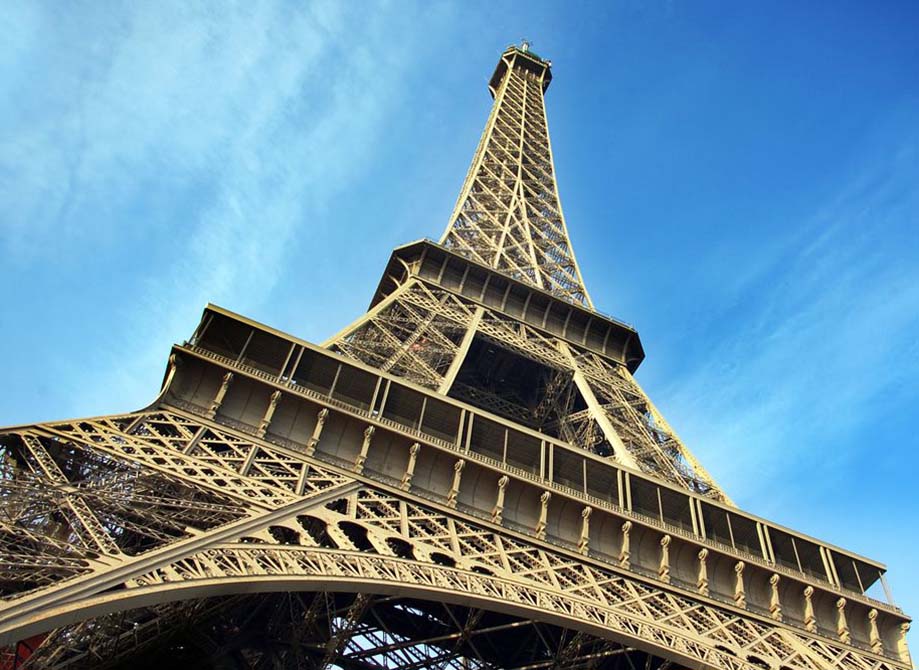
No matter how many photos you’ve seen, nothing prepares you for the moment you stand beneath the Eiffel Tower, craning your neck to take it all in. Gustave Eiffel’s 324-meter masterpiece was once dismissed by critics as an eyesore, but today it’s the heartbeat of Paris.
Pro Tip: Skip the midday queues by booking your ticket online for a timed entry. If you’re feeling adventurous, climb the stairs to the second level—it’s 674 steps of Parisian workout—but the view feels even sweeter when you’ve earned it. From there, an elevator whisks you to the top, where the city stretches out like an intricate map.
For a touch of magic, visit after sunset when the tower sparkles for five minutes every hour. It’s a moment that turns even the most seasoned traveler into a wide-eyed romantic.
2. Champs-Élysées and the Arc de Triomphe
From the Eiffel Tower, it’s a pleasant stroll or a quick metro ride to Avenue des Champs-Élysées, Paris’ grand boulevard. Here, luxury boutiques stand shoulder-to-shoulder with bustling cafés, and the scent of freshly baked pastries drifts from patisseries.
At the western end rises the Arc de Triomphe, commissioned by Napoleon to honor his army. Climb its 284 steps, and you’ll be rewarded with a panoramic view that captures the Eiffel Tower, La Défense’s skyscrapers, and the radiating avenues of the city. From up here, Paris’ urban geometry makes perfect sense.
3. The Louvre – A Kingdom of Art
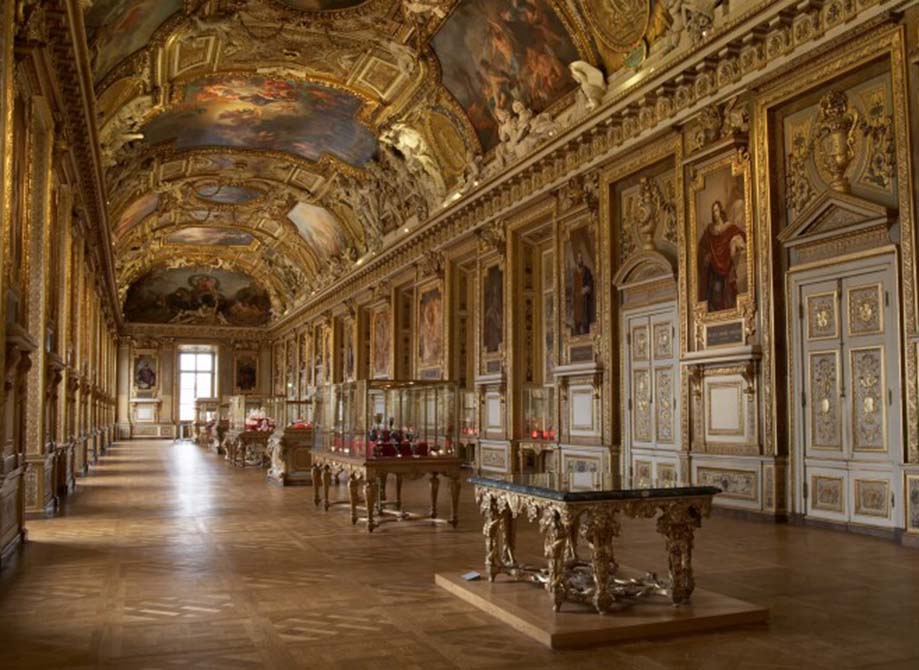
The Louvre Museum is more than just the home of the Mona Lisa. It’s a treasure trove of 35,000 artworks spanning from ancient civilizations to the 19th century. The building itself, a former royal palace, is as captivating as its collections.
Navigating Tip: The Louvre can be overwhelming, so plan your route in advance. Choose one or two wings—perhaps the Denon Wing for Renaissance art and the Sully Wing for French paintings—and linger.
And yes, you’ll probably find yourself swept along with the crowd toward the Mona Lisa. Take your photo, but don’t miss the equally mesmerizing “Winged Victory of Samothrace” and “Liberty Leading the People.” If you’re short on time, a 2–3 hour visit can still be deeply rewarding.
4. Musée d’Orsay – Impressionism’s Home
Housed in a former Beaux-Arts railway station, the Musée d’Orsay feels airy and welcoming compared to the Louvre’s grandeur. It specializes in 19th- and early 20th-century art—think Monet’s water lilies, Van Gogh’s swirling skies, and Renoir’s sun-dappled dance floors.
There’s something intimate about the way light pours in through the museum’s great clock windows, framing views of the Seine. Even if you’re not usually an art museum person, d’Orsay has a way of pulling you in with its warmth and human scale.
5. Seine River Cruise – Paris from the Water
While walking along the Seine is a joy, seeing Paris from the water is an entirely different experience. Hop aboard a Bateaux Mouches cruise and let the city unfold in cinematic fashion: Notre-Dame, the Conciergerie, the Louvre, the Eiffel Tower—all gliding past while you sit back and sip a glass of wine.
For romance, opt for an evening dinner cruise. The monuments are lit, their reflections shimmering in the dark waters, and the city feels as if it’s performing just for you.
6. Notre-Dame Cathedral – Gothic Majesty
Even after the devastating fire that altered its skyline, Notre-Dame remains one of Paris’ most moving landmarks. Standing before its intricate façade, with its saints, gargoyles, and biblical scenes carved in stone, you feel the weight of centuries.
If access to the interior is open during your visit, step inside for the stained-glass rose windows—intricate kaleidoscopes of color that change with the shifting daylight. Even from the outside, watching the sunlight dance across the flying buttresses is a reminder of the craftsmanship that defines Gothic architecture.
7. Sainte-Chapelle – A Jewel Box of Glass
A short walk from Notre-Dame brings you to Sainte-Chapelle, a 13th-century chapel that feels like stepping into a kaleidoscope. Its 15 towering stained-glass windows depict over a thousand biblical scenes in luminous detail.
Arrive when the sun is high, and the interior glows in a wash of blues, reds, and golds. If the light is right, you’ll understand why it’s often called the “light of God made visible.”
8. Montmartre – The Artist’s Hill
Perched high above Paris, Montmartre is a warren of cobbled streets, cafés, and artist studios. Begin at the Sacré-Cœur Basilica, whose white domes shine against the sky. Climb to the top for one of the city’s best views—on a clear day, you can see for miles.
Wander through Place du Tertre, where painters set up easels and offer to capture your portrait. While it can be touristy, there’s still an undeniable charm in watching an artist bring a canvas to life before your eyes. Duck into side streets for quieter moments—a hidden vineyard here, a local bakery there.
9. The Latin Quarter – Old Paris Comes Alive
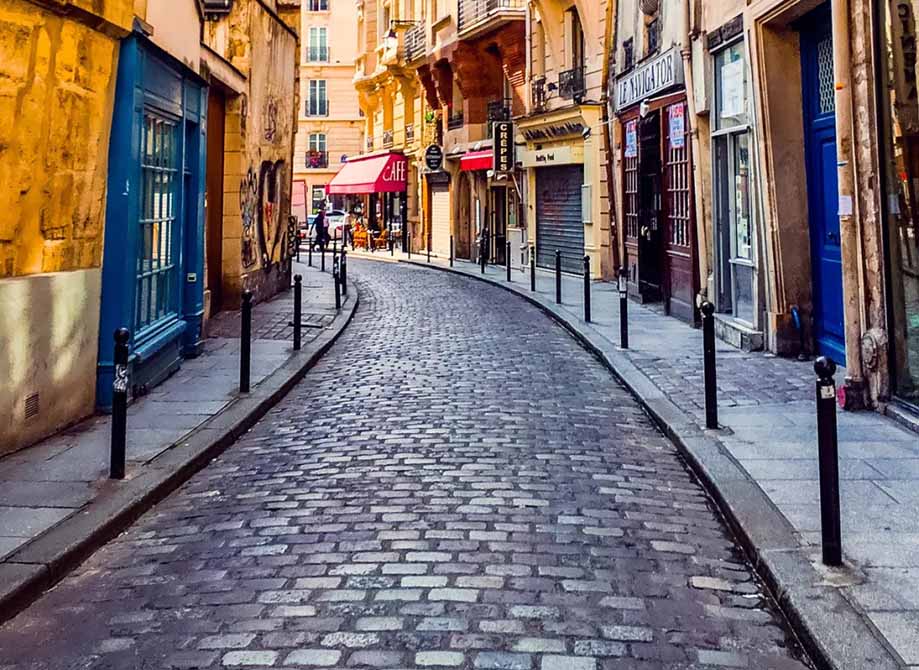
Cross the Seine to the Latin Quarter, where medieval streets twist between the Sorbonne University and the Panthéon. This is student territory, and the energy is infectious—bookshops overflow onto the pavement, crêperies serve paper-thin delights, and jazz seeps out of underground bars.
The Shakespeare and Company bookstore is a must-visit for English-language book lovers. Its creaky floors and literary nooks make it a place you can easily lose an hour in.
10. The Palace of Versailles – A Royal Dream
No trip to Paris feels complete without a journey to Versailles. Just a 40-minute train ride away, it’s a world of gilded ceilings, mirrored halls, and manicured gardens that seem to stretch to the horizon.
The Hall of Mirrors is the showstopper, with 357 mirrors reflecting golden chandeliers and ornate ceilings. But don’t rush—wander through the King’s and Queen’s apartments, explore the Petit Trianon, and lose yourself in the gardens, where fountains play among geometric flowerbeds.
Tip: Versailles is vast, so wear comfortable shoes. If you want to see it all, consider renting a bike or a golf cart to explore the grounds.
Practical Tips for Your Paris Journey
Getting Around: Paris’ metro system is efficient, affordable, and well-connected. Buy a multi-day travel card if you plan on hopping between sights frequently. Walking is also a joy here—sometimes the best moments happen between the big attractions.
Timing: Arrive early at popular spots to avoid the biggest crowds. Mid-mornings are often the sweet spot, after the early rush but before the tour groups arrive.
Language: While many Parisians speak English, learning a few French phrases—“Bonjour,” “Merci,” “Excusez-moi”—goes a long way in making interactions warmer.
Food: Don’t just eat near tourist spots; wander a few streets away to find more authentic (and often more affordable) cafés and bistros.
Pace Yourself: Paris isn’t meant to be conquered in a day. Leave room for detours, coffee breaks, and moments when you simply stop to watch the city go by.
The Paris State of Mind
What makes Paris’ classic landmarks so unforgettable isn’t just their grandeur, history, or architectural brilliance—it’s the way they weave effortlessly into the daily rhythm of the city. These icons are not isolated spectacles; they live and breathe alongside the café chatter, the hum of the métro, and the rustle of leaves along the Seine.
The Eiffel Tower might dazzle you with its glittering lights after dark, but so will the quiet joy of biting into a warm, buttery croissant at a tucked-away bakery as the city slowly wakes up. The Louvre’s masterpieces—majestic, centuries-old, and world-famous—will linger in your mind, but so will the sight of a street musician on the Pont Neuf, coaxing soft, nostalgic notes from an accordion while the river glistens beneath.
In Paris, the extraordinary and the everyday are never far apart. You might leave the grandeur of the Arc de Triomphe and wander straight into a side street where children are chasing pigeons and locals are debating over a chessboard in the park. You may visit Versailles in all its royal splendor, yet find yourself equally enchanted by a tiny wine bar where the owner remembers your face the next day.
This is the secret of Paris—it doesn’t demand that you only look up at its monuments; it invites you to look around, to notice the way life flows in and out of these landmarks as naturally as the Seine under its bridges. The city’s icons are not static museum pieces; they are living chapters in an unfolding story. And the moment you step onto its boulevards, you are no longer just a visitor—you are part of that story, adding your footsteps, your memories, and your own small moments to the timeless rhythm of Paris.